
Our social justice advocacy work has a new title — IDEA — reflecting our commitment to increasing inclusion, diversity, equity, and accessibility in our programs and projects.
Landscape designers in California have always worked within a complex social, cultural, and ecological context. Today, APLD California Chapter’s goal is to reflect and celebrate these diverse identities and experiences, by providing our membership with resources they can implement in their own professional practices. Our vision is a world where every landscape design professional and their clientele feel welcomed, respected, valued, and supported.
How Does APLDCA Define Inclusion, Diversity, Equity, and Accessibility?
Inclusion: We create social and ecological environments that welcome and value all people, recognize unconscious biases, and acknowledge the origins of our opinions and perspectives.
Diversity: We honor all the different and intersecting ways people define themselves, including, but not limited to, the spectrums of race, gender, age, religion, ability, education, ethnicity, appearance, socioeconomic background, ideas, perspectives, and values.
Equity: We ensure fair access to opportunity, recognition, education, and leadership for our members; and to aesthetic and technical expertise and resources for our clientele.
Accessibility: We design environments that can be used safely, comfortably, and with dignity by people of differing abilities, ages, backgrounds, and circumstances.
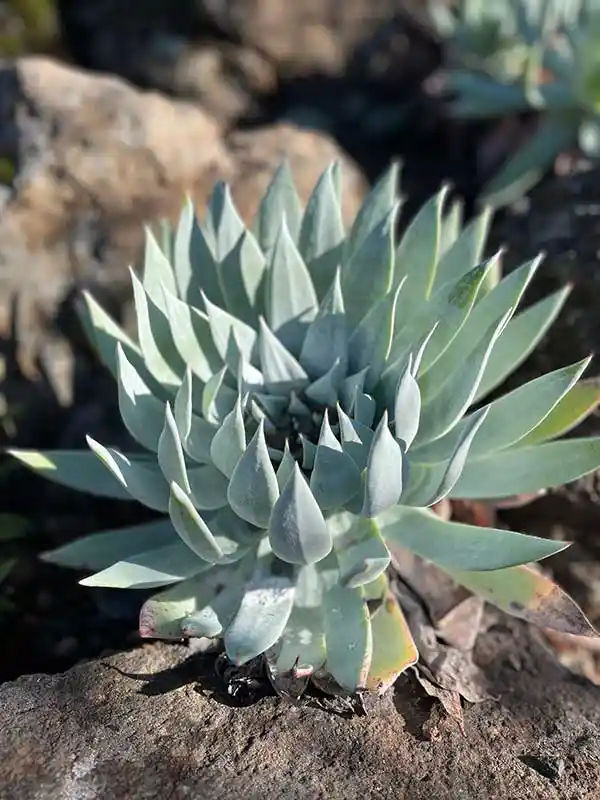
Photograph by Blue Hibiscus Gardens.
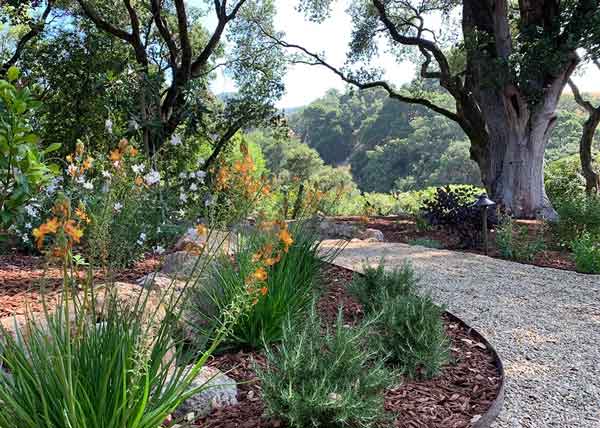
Photograph by Eileen Kelly
Land Acknowledgment
What we call California encompasses the ancestral lands of at least 109 known indigenous tribes, and many more whose names and territories were never formally recognized. APLD California Chapter acknowledges that wherever we live or work, our presence is rooted in a history of displacement: these lands were taken from, and never ceded by, their original stewards. However, hundreds of tribal members still live and thrive here, in territories that sustained their ancestors for millennia and still hold sacred sites of ceremony, community, and rest. We honor these original caretakers and seek to continue their stewardship of the region’s soils, waters, plants, and animal habitats.
Hybrid Vigor
We invite you to consider that we all become stronger and better — as landscape designers, as humans, and as an organization — when we “cross-pollinate” our knowledge and inspirations. In nature, this is known as hybrid vigor. The following list of resources will continue to be updated and is open to edits. If you have a resource you would like included, please let us know.
Articles
“White Privilege: Unpacking the Invisible Knapsack” by Peggy McIntosh
“Landscape Architecture Has a Labor Acknowledgement Problem” by Terremoto Landscape
“Black Landscapes Matter” by Kofi Boone
“Rest, Repose and Race: Leslie Bennett and Black Sanctuary Gardens” by The Planthunter
“How You Can Be an Ally Outdoors” by Neil Dhanesha
“Queer Ecology” by Priya Subberwal
“Liberated Roots” by Jey Ehrenhalt
“The Time Has Come to Decolonize Botanical Gardens Like Kew” by Alexandre Antonelli
“Racism Is Killing the Planet” by Hop Hopkins
“Who Gets to Be Afraid in America?” by Dr. Ibram X. Kendi
“My Life As an Undocumented Immigrant” by Jose Antonio Vargas
“How to Be an Active Bystander When You See Casual Racism” by Ruth Terry
Anti-racism Resources to Support AAPI Communities
“Black Gardeners Find Refuge in the Soil”, essays collected by Ike Edeani
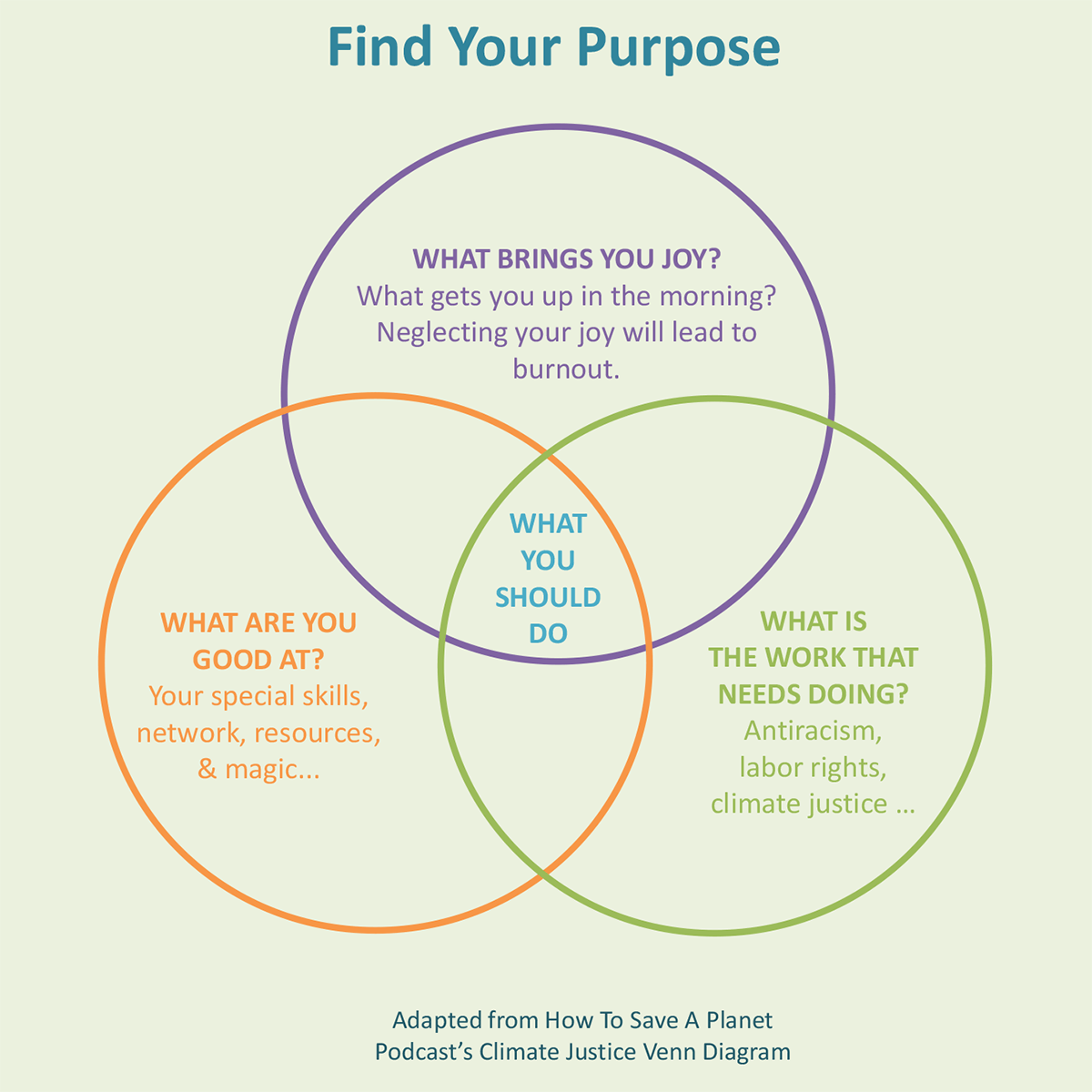
Click on the icon below to audit your business and determine how you can make equitable change in your practice.
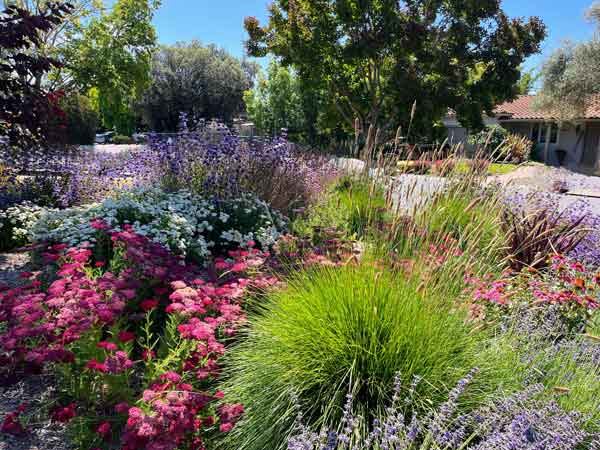
Photograph by Shireen Zia
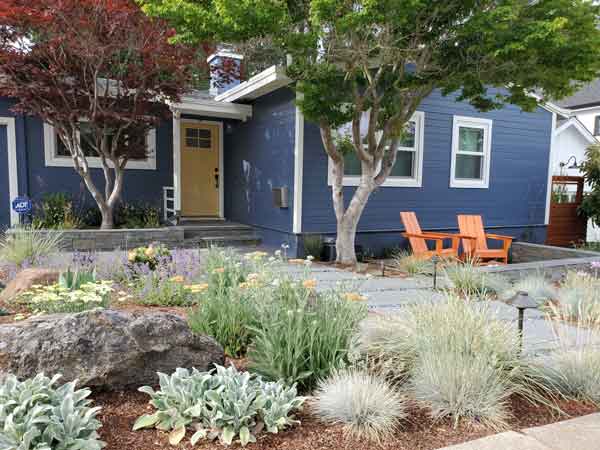
Photograph by Rootsy Garden Design
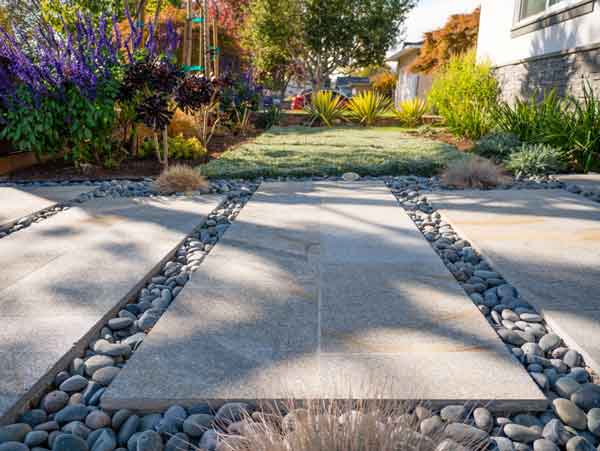
Photograph and Design by Blue Hibiscus Gardens

Design by EcoGardens Landscape Design
Books
(Please consider supporting your local bookstore and public library)
Conquer the Soil, by Abra Lee
White Fragility, by Robin DiAngelo
Braiding Sweetgrass, by Robin Wall Kimmerer
Black Landscapes Matter, by Walter Hood, Grace Mitchell Tada
My Garden Book, by Jamaica Kincaid
The Earth in Her Hands, by Jennifer Jewel
Black Feminist Thought, by Patricia Hill Collins
How to Be an Antiracist, by Dr. Ibram X. Kendi
I Know Why the Caged Bird Sings, by Maya Angelou
Just Mercy, by Bryan Stevenson
Redefining Realness, by Janet Mock
So You Want to Talk About Race, by Ijeoma Oluo
The Bluest Eye, by Toni Morrison
The Fire Next Time, by James Baldwin
The New Jim Crow: Mass Incarceration in the Age of Colorblindness, by Michelle Alexander
This Bridge Called My Back: Writings by Radical Women of Color, by Cherríe Moraga
With These Hands: The Hidden World of Migrant Farmworkers Today, by Daniel Rothenberg
Shadowed Lives: Undocumented Immigrants in American Society, by Leo Chavez
Videos/TV/Film
13th (Ava DuVernay) — Netflix
American Son (Kenny Leon) — Netflix
Blindspotting (Carlos López Estrada) — Hulu with Cinemax or available to rent
Fruitvale Station (Ryan Coogler) — Available to rent
I Am Not Your Negro (James Baldwin documentary) — Available to rent or on Kanopy
Just Mercy (Destin Daniel Cretton) — Available to rent
Selma (Ava DuVernay) — Available to rent
When They See Us (Ava DuVernay) — Netflix
The Other Side of Immigration (Roy Germano) — YouTube
The 800 Mile Wall (John Carlos Frey) — Netflix
Wetback: The Undocumented Documentary (Arturo Perez Torres) — Available to rent
The Future of Food (Deborah Koons Garcia)
The Harvest (La Cosecha) (U. Roberto Romano)
Connect with Us
As we grow individually and collectively, it is important to remember that, as in nature, changes do not occur immediately. Allow yourself and others time to learn, grow, fail, and thrive. And if you have questions about or suggestions for applying the principles behind IDEA, please stay in touch with us.
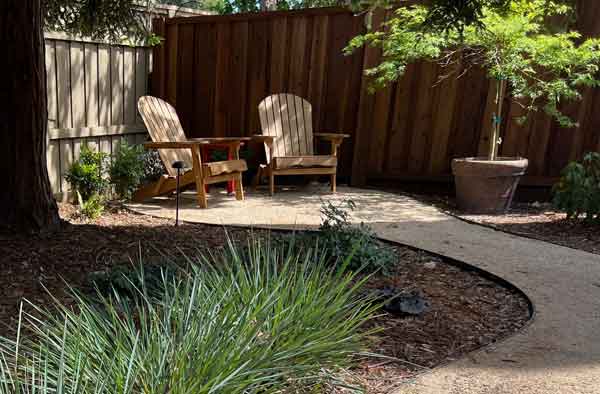
Photograph by C. Ferris